Showing posts with label Queen Elizabeth NP. Show all posts

Tuesday, May 1, 2012

Equipment and Supplies for a Ugandan Field Trip


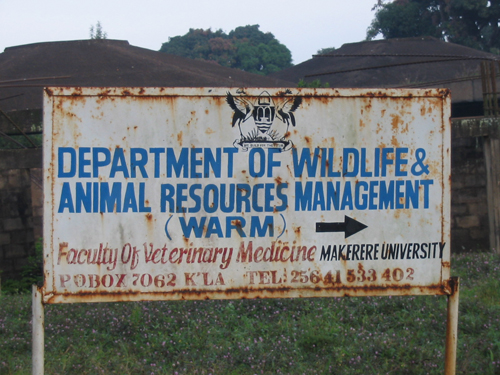
For several years I took students from Saskatoon's Western College of Veterinary Medicine to Uganda on a month-long field trip. We met people from the Makerere University veterinary school and in particular the Department of Wildlife and Animal Rescource Management.

During the trip we worked on the human x wildlife x livestock interface, which, in Africa is a very complicated matrix.

One thing I always prepared for our students was a check list.  First of course was the list of essentials. Then the basic supplies. Some I considered essential, others less so.  

Even today, three years after I retired, students come to me every year for advice. This year another group  of 2nd year students are off to Kenya and Uganda on a Global Vets program. Here is the blog from the WCVM 2008 group.

Here is a slightly edited version of the list that I used.


Equipment and supplies required for Uganda

ESSENTIAL
Ensure that your travel insurance covers medical emergency evacuation. 

Must , MUST Bring
  •   Passport; 3 copies of passport ID pages
  •   international student card (park entrance)
  •   money (US $), use high denomination notes. The Forex bureaus don’t like 20s. (watch date, this changes every year. As a general rule bring no notes that are more than 5 years old)
  •   Credit card or bank card
  •   vaccination records
  •   travel insurance
  •   ticket...for airlines
  •   malarial prophylactics

Clothing

Take old clothes that you don’t want to bring back. They can be left behind as gifts.

  •   jackets
    wind/ waterproof, LIGHTWEIGHT
    fleece/ sweater – it can drop to +15 at night
    (rarely, a bit colder)
  •   shirts
    •   long sleeve shirts (2)
    •   cotton shirt
    •   quick dry/ wicking shirt (i.e. polyester)/ short sleeve?
    •   tank top?(1) –
      Spaghetti strap shirts are OK (for certain folks)
    •   no white clothes (red dust everywhere)
  •   Pants
    bug pants/ nylon pants cotton pants (1-2)
  •   shorts
    respectable (e.g. hiking) shorts (1)
  •   socks
    hiking/ wicking socks (3-6 pairs). Long enough to allow you to tuck in your trouser
    bottoms in mosquito & tick areas – prevents ankle bites
  •   unmentionables (used to be known as “smalls”)
    you decide
  •   My wife (who came along on all these trips) suggested loose cotton (drip dry) dresses or skirts as they are cool (to wear, if not sartorially splendid)
  •   shoes
    •   hiking boots or similar for field work.
    •   sandals – for use in showers etc) Shoes tend to be bulky, so keep them to minimum. If you really want to bring runners as well, that’s fine.
  •   extras
    •   swim suit – almost everyone takes to the pool on the day off in Queen Elizabeth NP
    •   camera & good sized card (4 or even 8GB)
    •   If camera is digital, I have a card reader and can download (as long as my laptop doesn’t
      fry.
    •   Someone needs to make sure we have plenty of CDs for downloads
  • SUPPLIES
  •   Cell phone and charger (almost essential) SIM cards can be purchased locally. Air time is cheap and renewable almost everywhere. The network is superb. Everyone texts as a routine matter (known locally as sms). Land lines are either very unreliable or non-existent. Incoming calls are free, so get family members to call from Canada
       toiletries
    towel (divers/ swimmer’s towel→ wring & it dries fast), face cloth  
  • toothbrush, toothpaste, floss etc
    lotion: unscented, vit E lotion (99%) for people who sunburn easily  
  • shampoo, soap (unscented)
  •   sleeping bag and sheet/ liner (It will not likely get any colder than about +10C at night)
  •   therma-rest – bulky, but as there are only a limited number of dense foam mattresses it will prove useful if you have to camp.
  •   Treated mosquito net for sleeping - available in Uganda and can be ordered ahead at about $15 per, compared to about $40 for ones purchased here. Can be left behind as gifts or for the next lot of students.
  •   bug dope: DEET approx 20% (we use 33%)
  •   sun screen; at least 25 SPF. Higher the better. Lip balm with sun screen (not with Camphor/menthol)
  •   sun glasses with UV protection
  •   hat→wide brim for ear coverage
  •   canvas duffel bag/ back pack for day-to-day use. If you have a backpack that has an extra outside daypack compartment, it might well prove useful. If not, the sort of thing that is used for folks to bring lunch & books to school would suit
  •   Money belt or fanny pack
  •   Head lamp and spare batteries. Essential (or flashlight if you want).
  •   Personal first aid (headaches, a few bandaids (blisters) etc)
  •   crib board, cards, backgammon or whatever takes your fancy
  •   At least one book to read. Try and liaise ahead and make sure no duplication. Then swaps can
    occur.
  •   Swiss army knife/ multi-purpose tool
  •   Some sort of hardy water bottle (You will get thirsty – frequent re-hydration is essential –
    probably at least 1.5 L per day of water, maybe 2.5 on hot days (it can get up to almost 40 Celsius)

    Treats
    Bring some sort of snacks (Granola bars for instance) BUT - not ones that melt in heat (This is bad luck for chocaholics). Your biggest challenge will be not to eat them all in the first 2 days. These will act as what is known as comfort food as you find yourselves in a strange environment.

    Optionals 
      mP3. I have a solar iPod charger (will also charge the phones) 
      Binoculars
  •   H2O filter - bottled water is available everywhere, but tends to run out.
  •   Lonely Planet Travel Guide
  •   For anything electronic, bring plug adapter. Most systems are on 240 V.
  •   Note book(s) with water proof paper, pencils & eraser for those who wish to keep a journal
  •   Water purification tabs – no need to go overboard - (bottled water is widely available, but
    may be difficult to get in camp at Lake Mburo NP).
  •   Motion sickness pills if needed
  •   When at swimming sites, or relaxing around camp in the day time have a sarong type wrap
    for going to the bar, or away from the pool. These are known as kikoi for men, kitenge for
    women. Obviously worn at different levels. Readily available in Kampala if you lack one.
  •   String & clothes pegs (not everyone needs this, but 3 sets or so will prove useful)

    Medications
    Malaria prophylactics, antibiotics (at least one full course), headache meds,
    bandaids, wound ointment, laxative, diarrhea med, powder (Johnson’s baby or equivalent). Consult your physician or health centre well before you leave. Some vaccination courses require 6 months for complete coverage..
    Eyeglass prescriptions (glasses can be replaced in Kampala at much less cost than in Canada).
    For those who wear contacts, bring a pair of glasses – dust, etc can be a problem, also bring some eye ointment, as conjunctivitis can be a problem if you wear contacts
Surprises
Folks not used to travel in developing countries and tropical environments may be surprised by the fact that flush lavatories are rare and almost non-existent in remote spots.   This is the more likely option.


You will not be surprised that after a month of teaching and "mother henning"  almost 24/7 I got tired, or even exhausted. Someone in one of our groups caught me out in a day-time nap.

Saturday, April 7, 2012

Flamingos, salty water and salt mining in Africa


Another collection of pictures from Africa. This time it’s birds and more particularly, flamingos. With two exceptions they come from Kenya. The last two are from Uganda and Namibia. Even the Kenya ones are not all from the same spot.

It is, or was, Lake Nakuru that was always famous for the masses of these striking birds. Indeed it was said that there were, at times, over a million of them on the lake. That has changed dramatically. I took this picture over 40 years ago, and there appear to be more birds than water.  

On our visit there in December we saw very few, maybe a couple of dozen at most. 


We did see thousands, standing, feeding and flying at Lake Baringo, the next-most northerly lake in the chain that appears in the Rift Valley. The storm clouds had gathered in dark masses about the eastern wall of the Rift as we stood and marveled at the sight. The photos at Baringo were taken by one of thre three of us with cameras. Our daughter Karen, her husband Robert, or me.


These pictures do nicely show the difference in both size and bill colour between the Lesser and Greater species. On the left they are all Lessers. The fully dark beak with its small dark pink spot near the tip shows clearly On the right a single Greater, with his pink bill and dark tip stands out. The lesser also has a pinker hue to the body feathers.  How obliging of them to stand so still for the camera.

Feeling the cold?


I’m not sure if this one was feeling the cold, but he/she does seem to have a scarf around the neck.


Sart your engines!

Near the finsih line


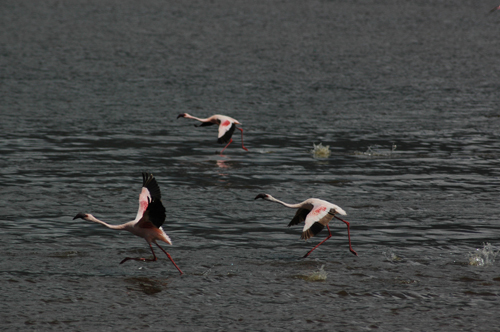
They are truly spectacular when they fly as the colurs stand out.


On previous trips we have also seen them at Lake Elementaita, the next lake south from Nakuru. The hill in the middle background is known as the Lord’s nose. The nasal shape does not show up well in this view, but the Lord name is a reference to Lord Delamere the famous, or infamous, English settler whose ranch, Soysambu, covered most of the land you can see beyond the lake, including the hill. Soysambu is now a conservancy and borders on Lake Nakuru National park effectively extending the area set aside for the purpose.


There are other lakes in the Rift Valley system, and of course the Rift divides into two arms. During our many trips with veterinary students to Uganda and the western arm, or Albertine Rift, we saw small numbers of flamingos in Queen Elizabeth NP, but not in the big lakes named in the 19th century for members of the British Royal family – they are Edward and George. We did seem them in the salt lake nearby, most frequently in Lake Katwe. The birds were never in huge numbers but perhaps because they saw so many humans mining the salt on a daily basis they were quite unconcerned about close approach. 

These pictures show a few of the saltpans that provided about half the village residents with their income. You can see a single bird at the very bottom right of this wide view of the pans. I can assure you that it has not been “Photoshopped” in. I even wonder if the photographer realized that she/he had snapped this single bird.

The briny water is trapped in pans about ten metres across and allowed to evaporate. As the salinity increases so the salt precipitates and can be harvested. You can see big piles of light or dark salt, some covered in plastic, stacked on the pan edges. The pans are individually owned and are traded for substantial sums of money or passed down in families. This is the only place in the world that I have ever visited where rain is simply not wanted. Indeed it is considered impolite to even suggest that the rainy season is approaching. Rain means less evaporation and the risk of spoilage or loss of a hard-won harvest.


These pictures were taken by me or one of the 79 students who joined me on those memorable trips, but I have no idea who. We shared thousands of photos every year, so thank you someone. I wrote about those Uganda teaching trips in The Trouble With Lions.


My wife and I had not expected to see flamingos a long way further south, so, in 1997 we were pleasantly surprised when we saw them at Walvis Bay, wading, feeding and stretching in the river estuary at low tide just south of this Namibian city. The one at left centre is graciously stretching his wings to give us a spectacular view. 


Sunday, February 5, 2012

Encounters with Fish Eagles


African Fish Eagles, close relatives and almost look-alikes of the American Bald Eagle are in many ways a symbol of African wildlife, and certainly of African bird life. They exist in many areas south of the Sahara and can be found almost anywhere where there is water. The sound of a fish eagle calling is so evocative that one can more-or-less see them when one hears them. I tried to find web links to that evocative sound to add here, but the one I tried did not work. Sorry 'bout that.

Here are a couple of series of pics from encounters with these beautiful birds.

The first ones came from the Okavango Delta in Botswana where our boatman showed us how it is that so many wonderful pictures of eagles “at the moment of grasp” are seen grabbing a fish from the surface of the water. He purchased a few fish from a local market, none more than about 18 cm in length, and then proceeded to make two small cuts, one near each end, in the side of the fish. We had wondered what the lengths of papyrus in the bottom of the boat were for. Now we found out. The boatman threaded about 15 cm of the reed into one of the cuts, and made sure it just emerged from the other. As we approached yet another bank-side tree with its resident eagle he began to make a call sounding just like the bird. He had had lots of practice and the bird at once paid attention.
“Where do you want it thrown?” he asked me. The first time I didn’t cotton on, but after that I pointed to a spot on the water surface that would best suit the light and background and he proceeded to wave the fish around his head a couple of times and, as the eagle launched he threw the “bait”, which landed and, because of the papyrus, floated.
Of course the eagle, like one of Pavlov’s dogs, knew exactly what was coming and at once obliged, swooping down to pluck its dinner from the surface. Off it flew with its reward.

We had other amusing and not so amusing (at least for the birds) encounters. The flagship spot for tourists to bird watch and enjoy a two-hour boat ride in Uganda’s Queen Elizabeth National Park is a trip down the Kasinga Channel.
I saw this hammerkop try and indulge in some parasitic kleptomania as he edged near an eagle that was tucking into a fish. We were in sight for about ten minutes, and he did not succeed in that time slot. Wise bird. Those talons would have inflicted some serious damage, had they been deployed, and I’m sure he knew it.
Perhaps the most amazing encounter occurred when our boat in Lake Mburo National Park rounded a clump of papyrus as a pair of fish eagles decided that they did not appreciate the goliath heron that was hunting in the lilies nearby. They attacked, not just once, but several times. The heron knew who was boss. His frantic efforts to escape and head for the reeds would have been better captured on video, but all I had was my still camera. These two pictures give some sense of how the heron felt.

Friday, July 1, 2011

Travel in Uganda

Link
A couple of days ago I got a letter out of the blue from Derek, a Washington father worried about his son who is off to Uganda. Food was a major concern. We exchanged a coupe of mails and here is what came out of it.

Jerry, do you have any Uganda guidelines you have sent out about what to eat and what not to eat for westerners who don't want to get sick or distressed stomachs? .... some kind of "DON'T EAT THIS IN UGANDA".

Immediately after my son gets back to the USA from this 3 week trip, he plans an extremely rigorous climb of a very high mountain in Wyoming and I am worried that he might get sick from eating strange foods and drinks in Uganda and have difficulty in Wyoming or even in Uganda.

Now it seems that I have to go too because my wife wants to make sure it is a safe trip.

So, we fly there July 1 and go away into bush driving from Kampala on the 7th and return to the USA around the 23rd or so.

You would know best what is safe there.

I asked Derek how he had tracked me down and he said that he had read my book The Trouble With Lions: A Glasgow Vet in Africa and found me on Google.

Here is some of what I wrote back.

On food, we ate almost anything and did well. Wonderful fruit everywhere.

When Derek and Seth get to Uganda one of the most spectacular things they will see are the wonderful fruit and veg stalls alongside the roads. Common fruits in the right season include mangoes, avacado, watermelons and jackfruit. In some parts of the country delicious pineapples are abundant.
Here they are piled in Kampala ready for distribution.
These ones are set in a customised frame in the town of Mbarara.vThey are so much better than the ones in our local supermarkets that we have given up buying them here.

I also gave them a few food tips.

“If you are lucky enough to stop at a roadside stall that sells grilled green bananas (matooke), tasty (very tasty) chapatis and a variety of meats you should make sure the meat is cooked through. My favourite is "chicken-on-a-stick." It's delicious but the vendors, usually young people, will mob the vehicle with several sticks each. Choose one person and ignore the others. Then go back to the charcoal brazier and insist that the chosen piece of meat be cut to the bone to show if it is cooked through. If not (likely) then it should be put back on the heat and carefully watched. Once done it can be thoroughly enjoyed.”

“French fries are called chips. On potatoes in general, if you ask for potatoes you will get sweet potatoes. If you want potatoes as we know them ask for Irish.”

Another thing that I was asked for was an emergency medical supplies list advisable for self drives in the extreme back country. Of course I could not do much here as I am not a physician, but I did reply briefly as follows:

“On meds, you should seek advice from a physician. We only had one surprise in 8 years. We had all the usual things, antibiotics, antihistamines, ointments, headache stuff, diarrhea stuff, band aids, etc., etc. We did not have laxatives. As you may have read in my book The Trouble With Lions one very uncomfortable student said to my wife "I would do anything for a fleet enema right now." She had not passed stool for 3 days!

On a final note the family will travel connected. Here is what Derek wrote
“I am thinking of getting a USB data modem from *both* of the two cell carriers in that country, and then plugging them both into my router, which will default over to the best connection at all times, unless you feel that one carrier is so clearly superior to the other that there isn't a need for that.

I'll want a good connection to data so I can GPS drive with Google Earth data displayed on the laptop.”

Here is my reply.

“I'm sure that the Internet over a laptop has improved a lot in the two years since I was there. Good luck with it. Here, Jen Curragh is on the phone with her family in Manitoba and we are in the middle of Queen Elizabeth NP at least 40 km from the nearest town. The cell phone service is way superior to ours here and much, much cheaper. For one thing you don't pay extra for incoming calls or texting, which we do here. I consider this an absolute rip-off and have written to our local provider to tell them. Got me nowhere of course.”

Folks in UG use texting a massive amount.

One funny story about cell phones.
I delivered a lecture at the vet college & asked a colleague whether it would be okay to ask the audience to urn off their phones. "No way," he said. "They go to church to hear a message from God, but if the phone rings they take that message right away!'

So, if you plan to travel in that part of the world make sure you are fully vaccinated, make sure you have good mosquito nets and make sure you get started on malaria prophylaxis before you travel. As for food, if you are sensible it will be the least of your worries and you will no doubt have some very pleasant surprises.

Wednesday, June 15, 2011

Snares and poachers

Link
In my post of June 10 I wrote about the real situation in Kenya’s Masai Mara and the decline in wildlife numbers. I also referred to poaching and the numbers of poachers caught on a regular basis. Poaching is so widespread in Africa that one hardly knows where to start, but I did refer to the experiences of one park warden in the Serengeti. This was Myles Turner, who was there for 16 years and documented his work in his fascinating 1987 book titled My Serengeti Years: The Memoirs of an African Game Warden. I suggested that his book might just as easily have been subtitled The Poaching Wars.

One of the major tools for poachers is the snare. Here are a few examples of ones I have seen in various places. In Namibia’s Etosha National Park there is even a sort of “rouges gallery” in the park offices where this display case shows various types of snare that have been found over the years.

When I worked on an elephant project in Rwanda in the 1970s we found that 27% of the animals had injuries related to snares. There was one that had a cable deeply embedded in the creatures leg, while several animals had lost part or all of their trunks because they are ever curious and made the mistake of picking up snares meant for buffalo and the like.

When I was with veterinary students in Uganda’s Queen Elizabeth National Park we never failed to see animals damaged by snares, or find snares, usually at waterholes. We were able to free this warthog after immobilizing him, but I do wonder how he got on.

We found a collection of wire snares including the nasty tin can lid type that is designed to ride up an animal’s leg if it is unfortunate enough to stand upon the thing. Just have a look at the picture and imagine what will happen.

It is easy enough to condemn the poachers, but the issue is not that simple. "Poacher" is a term used by landowners to describe people who might otherwise be known as hunters. If you have no source of protein, virtually no income, and a family to feed, and a wild animal hangs out near your home, what are you to do? This is not the same as the commercial, crime syndicate type of poaching that has led to the decimation of rhino and tiger populations, to mention but two of hundreds of species.

The news about a major highway that will cut through the heart of the Serengeti has been simmering for quite a while, but now seems to have surfaced in major print media. More on this when I drop by again.

Thursday, April 22, 2010

Africa's ancient board game


Linkhttp://www.boardgamegeek.com/boardgame/14186/bao, http://news.bbc.co.uk/2/hi/africa/8635258.stm http://en.wikipedia.org/wiki/Mancala

The photo posting on the BBC website today flashed me back to Africa and the game of Kiothi that is played in the Meru region of Kenya north and east of Mt. Kenya. The BBC story is set in the Southern Sudan where the game is called aweet. Kiothi is the Meru name of the game known widely in East Africa, especially Zanzibar and Tanzania as Bao, but with plenty of local names and variations. A wider name is Mancala, which is described on a Wikipedia page. Good players can see moves way ahead, and the game proceeds at lightning speed. The clicking almost sounds like a rapidly played game of Mahjong.

The Most boards have four rows of eight or ten hollowed out depressions in which seeds, stones or whatever is available are placed before the start and then moved according to a strict set of rules. Here the eldest son and daughter of one of the rangers in Queen Elizabeth National Park in Uganda are playing. Others boards have two rows of ten, and I have seen sets in which there were two rows of seven. Some have single larger hollows at each end, others don’t.

I have the board and seeds of the Meru version and also the rules that were translated from the Kimeru language by the late Len Lemoine who was a schoolteacher in the area in the 1960s. Len even told me that he had seen the game being played in the West Indies. Given the history of that part of the world this is no big surprise.

It is not just on wooden boards that the game is played. I have watched men (exclusively men) playing near a watercourse at Laisamis, in Kenya’s Northern Frontier District. They simply fisted out depressions in the sand, picked up some pebbles and went at it.

There are older, no doubt much older and once permanent, places where tournaments may have been played on huge rocks that have had rows of hollows ground into their surfaces. The ones I have seen are located north and east of Mt. Kenya, two of them on the iconic flat-topped mountain called Ololokwe (seen here beyond and to the right of a nest-filled acacia) and one to the east of the town of Meru near what is now a small village surrounded by smallholder tea plots but was once in the middle of the forest that covered the Nyambeni hills. It was here that I took the photo of my wife Jo and Patrick Mugambi playing a mock game as a crowd of children looked on. Another ancient site must have been somewhere in the Ankole kingdom of Uganda. At the heart of that kingdom I found this old rock with Bao indents ground into it - eight by five by the look of it, with no end depressions. Who knows how old this one is or what the rules were, or maybe are?

The rules are too long to quote fully here, but here are one or two titbits. If any one has a hankering to make a board they can email me for the rules that I can send as a pdf. I suspect that the Meru Kiothi rules will only work properly for the board with two rows, as opposed to four. Those who want other rules can no doubt find some at one of the websites or even books devoted to the game

This picture, taken at home, shows our board that was made forty years ago by a craftsman in Meru. In the hollows are the marble-sized seeds of the Caesalpinia tree (Njothi in Kimeru) with which the game is played in that part of Kenya. Caesalpinia is a genus of prickly, scrambling shrubs with bi-pinnate leaves and vicious recurved spines. These seeds must be some of the hardiest around because they float well and can remain viable after spending two, or more, years afloat.
The board has ten hollows on each side, with larger indents, known as bomas into which captured stones are placed. The object is simple, to capture more stones (representing cattle) than one’s opponent. But not that simple. Some tribes rate a one-warrior victory as equivalent to two normal victories; some rate it as worth ten victories by any other margin.

The game can only be played by two people at a time. In Kiothi each player is given 30 warriors (seeds that look like acorns – or stones or what have you.) They are placed in the six right hand bomas on each side – five warriors to a boma.

The order of play (who goes first) can be determined by various means but the toss of a coin is as good a way to decide as any. The first player may move any of the warriors in any of his bomas, provided that he moves always to the right depositing one warrior in each of the cups beginning with the cup immediately to the right of the one from which he has taken the warriors and provided the last warrior does not land in a boma that is already occupied by one or more warriors

To begin the game, each player is permitted to take the five men form each of two of his bomas and place them in any of the cup – on either side of the board. For the rest of the rules, drop me a line. They may look simple, but only a simpleton woud take on an expereinced native player for money.

Thursday, March 5, 2009

A Game Drive, a Boat trip and some foreplay

A game drive and a boat trip today. On the boat trip in Queen Elizabeth NP the usual relaxing ride amid schools of snorting hippo and hundreds of birds.


The main thing was watching a bout of foreplay that I just photographed between a bishop and one of his girlfriends. Of course you must understand that this bishop was a Southern Red Bishop, which is a sparrow-sized, brightly-coloured bird that has a spectacular way of erecting (correct term) the vibrant orange-red feathers on his crown when displaying.

Off to Kampala tomorrow and thence Nairobi. Internet will be scant for a few days.

Wednesday, February 18, 2009

An injured lion in QEP

The last day in Queen Elizabeth NP was productive but exhausting. We started the day with a brief meeting with the Community Conservation Warden, Wilson Kagoro, and made arrangements for day trips for senior pupils from both Kasenyi Primary School and Equator Highway Primary School to have a day out. Forty children from each school will be picked up and brought to the park HQ where they will be fed, shown around, and given some conservation classes. The highlight of the trip will be the two-hour boat ride on the Kasinga channel, the same ride that we all took last Friday.

I dropped by Kasenyi Primary School to how the solar equipment was working. One DVD had already been shown to the kids, and Gorrit had prepared two meals with the solar oven. I asked her to pose outside her home with this useful piece of equiemt as I had managed to forget to take a pic the other day.

Then we set out to continue our research efforts with buffalo. This proved pretty frustrating and for four hours we were unable to get near enough any animals to dart one. However, the group traveling with me in the university Land Cruiser did see a very lame female lion with three half-grown cubs Both her left hind and right front legs were obviously hurting her and she would have had a hard time hunting, even with hundreds of kob around her. By the time we caught up with the rest of the team we had also found a sick buffalo.

We decided to try and examine the buffalo first, as the lioness was unlikely to move far. We did get one dart into her, but unfortunately it deflected of a wisp of grass and we were never able to get close enough again to do any more. Eventually we left her and returned to the lions.

It was not long before Dr. Ludwig Siefert had a dart in her and we were able to make a very detailed examination. This picture shows the small lesions on her gums and where she had recently lost a tooth in her lower jaw. She had obviously been in a fight.There were several bite wounds in her legs, and a claw on her rear leg had been torn off. The worst lesion was a deep penetrating bite mark low down on her right front leg. An hour later she had been weighed, her wounds had been cleaned up and she had been given a healthy dose of antibiotics. I took a bunch of pictures of the bite marks with my new cell phone, as well of a couple of short video clips of her being weighed, but I have not figured out how to download them on to this computer. Sorry ‘bout that, all I have is a pic of her getting a much needed does of fluids under the skin. An hour after that she was up and moving.

Next stop Lake Mburo National Park, but complete lack in Internet until about the 25th.

Brucellosis in a buffalo

On Tuesday we got back to the veterinary side of our work. We were off at first light to look for a herd of Cape Buffalo as we are studying brucellosis in this species and in the park in general. It did not take us long to find an adult cow with an enormous swelling low down on her left from leg. Such swellings are one of the cardinal signs of this disease in cattle, bison and buffalo. We soon had a dart in her and found that she did indeed have severe problems.

The swelling was full of pus, and it was no wonder that she was lame. When we got back to the lab we ran a test on the serum sample we had taken, and yes, we confirmed brucellosis.