
 For several years I took students from Saskatoon's Western College of Veterinary Medicine to Uganda on a month-long field trip.
 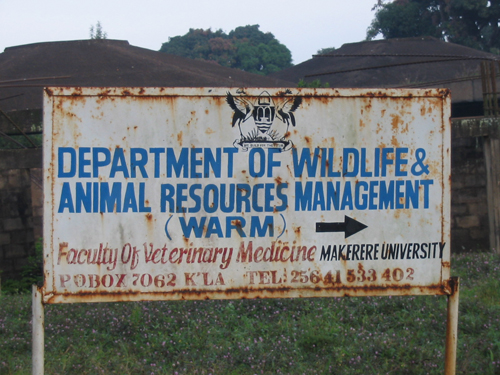 We met people from the Makerere University veterinary school and in particular the Department of Wildlife and Animal Rescource Management.
During the trip we worked on the human x wildlife x livestock interface, which, in Africa is a very complicated matrix.
One thing I always prepared for our students was a check list. First of course was the list of essentials. Then the basic supplies. Some I considered essential, others less so.
Even today, three years after I retired, students come to me every year for advice. This year another group of 2nd year students are off to Kenya and Uganda on a Global Vets program. Here is the blog from the WCVM 2008 group.
Here is a slightly edited version of the list that I used.
Equipment and supplies required for Uganda
ESSENTIAL
Ensure that your travel insurance covers medical emergency evacuation.
Must , MUST Bring
-
Passport; 3 copies of passport ID pages
-
international student
card (park entrance)
-
money (US $), use high
denomination notes.
The Forex bureaus don’t
like 20s. (watch date, this changes every year. As a general rule bring no notes that are more than 5 years old)
-
Credit card or bank card
-
vaccination records
-
travel insurance
-
ticket...for airlines
-
malarial prophylactics
Clothing
Take old clothes that you don’t want to bring back. They can be left behind as gifts.
-
jackets
wind/ waterproof, LIGHTWEIGHT
fleece/ sweater – it can drop to +15 at night
(rarely, a bit colder)
-
shirts
-
long sleeve shirts (2)
-
cotton shirt
-
quick dry/ wicking shirt (i.e. polyester)/ short sleeve?
-
tank top?(1) –
Spaghetti strap shirts are OK (for certain folks)
-
no white clothes (red dust everywhere)
-
long sleeve shirts (2)
-
Pants
bug pants/ nylon pants cotton pants (1-2)
-
shorts
respectable (e.g. hiking) shorts (1)
-
socks
hiking/ wicking socks (3-6 pairs). Long enough to allow you to tuck in your trouser
bottoms in mosquito & tick areas – prevents ankle bites
-
unmentionables (used to be known as “smalls”)
you decide
-
My wife (who came along on all these trips) suggested loose cotton (drip dry) dresses or skirts as they are cool (to wear, if not sartorially splendid)
-
shoes
-
hiking boots or similar for field work.
-
sandals – for use in showers etc) Shoes tend to be bulky, so
keep them to minimum. If you really want to bring runners as well, that’s fine.
-
hiking boots or similar for field work.
-
extras
-
swim suit – almost everyone takes to the pool on the day off in Queen Elizabeth NP
-
camera & good sized card (4 or even 8GB)
-
If camera is digital, I have a card reader and can download (as long as my laptop doesn’t
fry.
-
Someone needs to make sure we have plenty of CDs for downloads
-
swim suit – almost everyone takes to the pool on the day off in Queen Elizabeth NP
- SUPPLIES
- Cell phone and charger (almost essential) SIM cards can be purchased locally. Air time is cheap and renewable almost everywhere. The network is superb. Everyone texts as a routine matter (known locally as sms). Land lines are either very unreliable or non-existent. Incoming calls are free, so get family members to call from Canada
toiletries
towel (divers/ swimmer’s towel→ wring & it dries fast), face cloth - toothbrush, toothpaste, floss etc
lotion: unscented, vit E lotion (99%) for people who sunburn easily - shampoo, soap (unscented)
-
sleeping bag and sheet/ liner (It will not likely get any colder than about +10C at night)
- therma-rest – bulky, but as there are only a limited number of dense foam mattresses it will prove useful if you have to camp.
- Treated mosquito net for sleeping - available in Uganda and can be ordered ahead at about $15 per, compared to about $40 for ones purchased here. Can be left behind as gifts or for the next lot of students.
-
bug dope: DEET approx 20% (we use 33%)
-
sun screen; at least 25 SPF. Higher the better. Lip balm with sun screen (not with Camphor/menthol)
-
sun glasses with UV protection
-
hat→wide brim for ear coverage
-
canvas duffel bag/ back pack for day-to-day use. If you have a backpack that has an extra outside
daypack compartment, it might well prove useful. If not, the sort of thing that is used for folks to bring
lunch & books to school would suit
-
Money belt or fanny pack
-
Head lamp and spare batteries. Essential (or flashlight if you want).
-
Personal first aid (headaches, a few bandaids (blisters) etc)
-
crib board, cards, backgammon or whatever takes your fancy
-
At least one book to read. Try and liaise ahead and make sure no duplication. Then swaps can
occur.
-
Swiss army knife/ multi-purpose tool
-
Some sort of hardy water bottle (You will get thirsty – frequent re-hydration is essential –
probably at least 1.5 L per day of water, maybe 2.5 on hot days (it can get up to almost 40 Celsius)
Treats
Bring some sort of snacks (Granola bars for instance) BUT - not ones that melt in heat (This is bad luck for chocaholics). Your biggest challenge will be not to eat them all in the first 2 days. These will act as what is known as comfort food as you find yourselves in a strange environment.
Optionals
mP3. I have a solar iPod charger (will also charge the phones)
Binoculars

-
H2O filter - bottled water is available everywhere, but tends to run out.
-
Lonely Planet Travel Guide
-
For anything electronic, bring plug adapter. Most systems are on 240 V.
-
Note book(s) with water proof paper, pencils & eraser for those who wish to keep a journal
-
Water purification tabs – no need to go overboard - (bottled water is widely available, but
may be difficult to get in camp at Lake Mburo NP).
-
Motion sickness pills if needed
-
When at swimming sites, or relaxing around camp in the day time have a sarong type wrap
for going to the bar, or away from the pool. These are known as kikoi for men, kitenge for
women. Obviously worn at different levels. Readily available in Kampala if you lack one.
-
String & clothes pegs (not everyone needs this, but 3 sets or so will prove useful)
Medications
Malaria prophylactics, antibiotics (at least one full course), headache meds,
bandaids, wound ointment, laxative, diarrhea med, powder (Johnson’s baby or equivalent). Consult your physician or health centre well before you leave. Some vaccination courses require 6 months for complete coverage..
Eyeglass prescriptions (glasses can be replaced in Kampala at much less cost than in Canada).
For those who wear contacts, bring a pair of glasses – dust, etc can be a problem, also bring some eye ointment, as conjunctivitis can be a problem if you wear contacts

 Folks not used to travel in developing countries and tropical environments may be surprised by the fact that flush lavatories are rare and almost non-existent in remote spots. This is the more likely option.
You will not be surprised that after a month of teaching and "mother henning" almost 24/7 I got tired, or even exhausted. Someone in one of our groups caught me out in a day-time nap.


